Aim
Creating an AI/ML model using customers’ historical credit data to predict the probability that a customer is going to default (target=1) or not (target=0).
Data
- There are 39 independent variables about the customer’s historical credit behavior and records. 37 of 39 are numerical variables such as income tax, credit used, capital income, salary surplus, credit approved and so on. 2 of 39 are categorical variables: big city and loan type.
- The dependent variable is default (target=1) or not (target=0).
ML model
Light Gradient Boosting Machine (LightGBM)
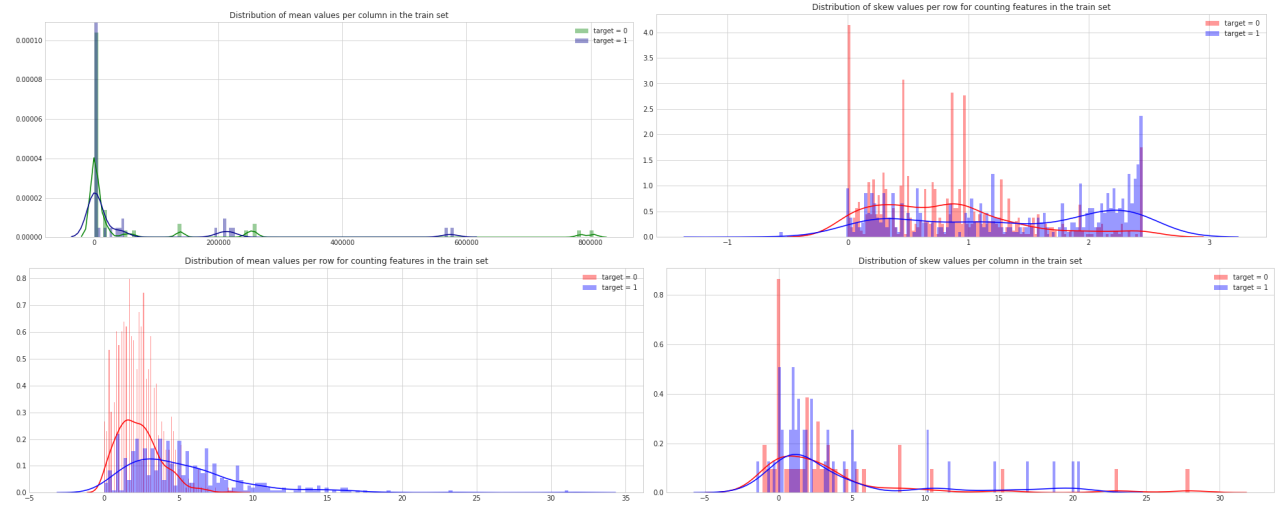
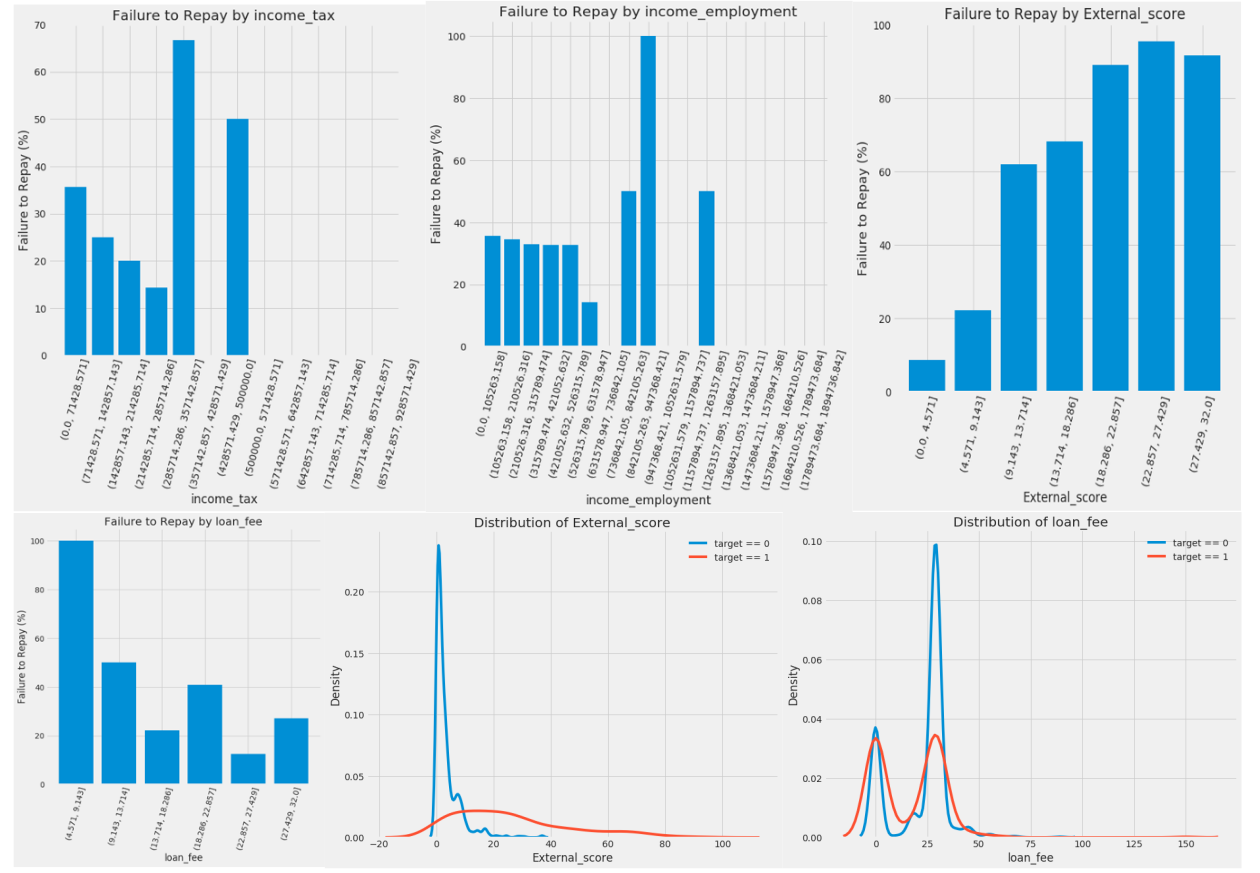
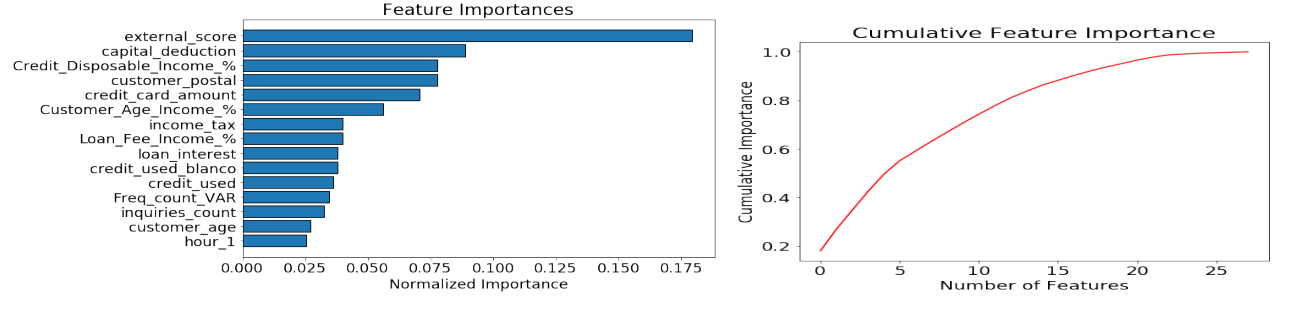
Exploratory data analysis (EDA) results
Performance of the model
The whole dataset was split into two parts: 80% data for training and tuning and 20% data for testing. When training and tuning the model, cross-validation (K-Fold cross validation) was used.
The best ROC AUC score was 97.128%.